


24 June
5 min. read

Protein is one of the most important constituents of living matter. Without it life would be unthinkable. All life processes are dependent on protein - for example, digestion and absorption of nutrients are impossible without the involvement of digestive enzymes that are inherently proteins.
Proteins have many functions in the human body related to basic movement, reproduction, growth, hormonal regulation, heredity, etc. Protein is the material that cells use to build and regenerate tissues. And we are not just talking about muscle tissue - protein is involved in the development of skin, hair, nails, bones and connective tissue. Protein is the second most common substance (water is the first) in the human body (about 80-90% of total organic composition of animal tissue is protein).
And if proteins are the "bricks" of the human body, then amino acids are the building blocks that make up those bricks. In the composition of proteins, there are 20 amino acids, 11 of which the human body can produce., and the remaining 9 (valine, isoleucine, leucine, lysine, methionine, threonine, tryptophan, phenylalanine, arginine) are indispensable (essential) and must be obtained by food.
Complete vs. Incomplete Protein Sources
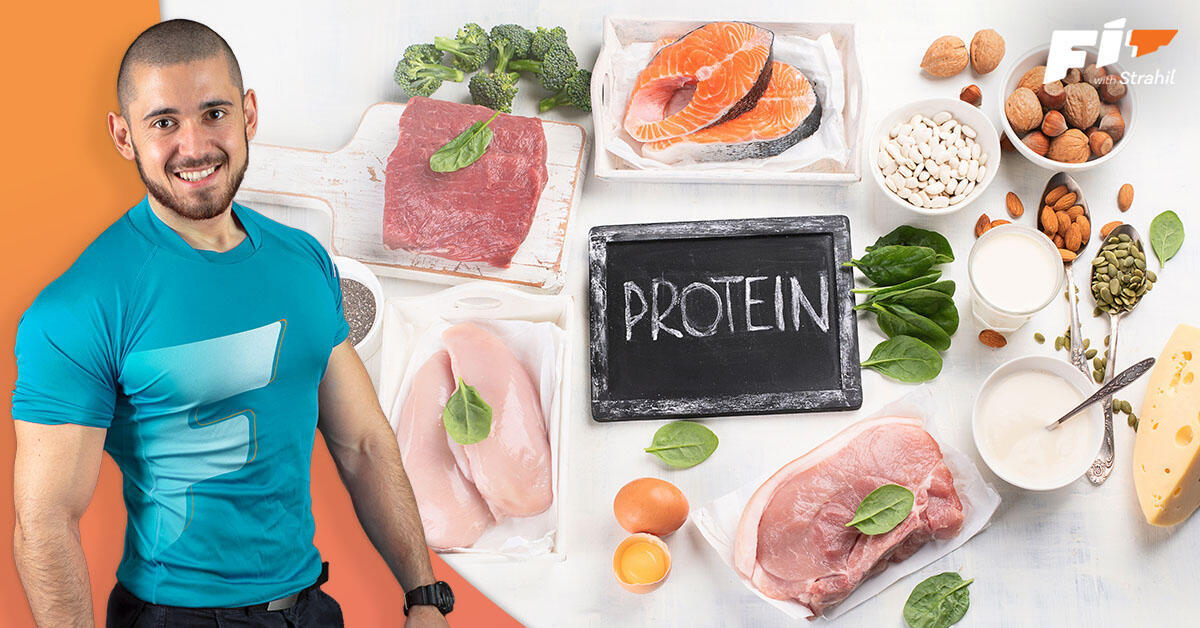
The highest-quality protein sources are foods of animal origin such as:
- Eggs
- Lean meat
- Fish and seafood
- Dairy products (milk, cheese, curds)
Animal protein is complete, meaning it contains all essential amino acids, which your body needs - in the exact amounts and ratios.
Grains, legumes, seeds, nuts and some vegetables also contain significant amounts of protein, but are considered inferior sources of protein because they do not contain all essential amino acids - in most cases only 4 or 5 of them.
There are ways in which you can combine sources of protein from vegetable origin so to obtain all 9 essential amino acids. For example, if you combine vegetables, nuts, legumes or pulses with grains, you will deliver the body with all essential amino acids. The classic combination is beans and rice.
There is another way to obtain all 9 essential amino acids - through protein supplements (usually in the form of whey protein). For people with busy life who have no time to eat 5-6 times a day, protein supplements are a convenient solution.
The Role of Protein in Training Nutrition
If you exercise regularly, your body needs more protein than usual to recover and repair damaged muscle cells after training. If you do not receive the necessary amount of protein, it will be hard to preserve your muscle mass (especially if you're in a caloric deficit).
Unlike fat tissue, which stores more than 7 000 calories per kilo, muscle tissue has only about 1 300 calories per kilogram. That is, if necessary, your body will burn muscle to procure energy. If you think: "What the hell, I don't care about my muscles, I'm not a bodybuilder ...", just consider the following:
Muscles do not just make you look more athletic. Muscle mass affects your basal metabolic rate (BMR). And fast metabolism is the key to successful fat burning. How do you think athletes eat so much food and are still in great shape? The answer is simple: they look after their muscle mass which ensures rapid metabolism. There's no need to become Mr. Olympia, but you need muscle mass to keep your metabolic rate high.
There is a physiological reason to work out your muscles. Let's compare the physique of a marathon runner and a sprinter. Marathon runners are skinny and their muscles are almost gone. Sprinters are the complete opposite: they have powerful bodies that are sculpted and muscular. Both marathon runners and sprinters have low body fat percentage, but the second have a body that looks like a work of art, while the body of the first resembles a skeleton.
If you want to lose weight effectively, your goal is to look like a sprinter, not a long-distance runner. For this you need adequate protein intake.
Protein has other functions in the human body. It is crucial for certain metabolic and hormonal processes, and even plays an important role in immunity. Ignore protein intake for a long time and you can easily get sick. Furthermore, if you are not getting enough protein, you will not recover optimally from training and your results at the gym will suffer.
Recommended Daily Intake
The recommended daily protein intake for adults with low physical activity is 0.8 grams per kilogram of body weight, which is the equivalent of 170 g chicken breasts and a few glasses of milk for a 90 kg male. But note that this intake is extremely low for men and women who workout intesively.
Yes, if you lie on the couch all day, 0.8 grams per kilogram can satisfy your needs. But for active individuals this intake is extremely insufficient to prevent catabolic processes (muscle loss) after training.
To burn fat effectively, your overall calorie intake should be reduced (you must be in a calorie deficit), but not at the expense of protein - protein intake should be maintained at the same level or even higher.
That is, for optimum results the consumption of protein in terms of percentages of total calories should grow. Why? Protein not only prevents muscle loss but it is also the macronutrient with highest thermic effect. That is because digestion, absorption, transportation of protein requires a lot of energy. The higher the protein content of a given food, the higher it will be its thermic effect.
Furthermore, protein helps fight hunger because it activates our mechanisms for controlling appetite. When we eat a high protein meal signals from the intestine to the brain are sent. This way the brain knows that we have eaten enough and we are full. So it is much more difficult to overeat with high protein foods.
Despite all these benefits of protein consumption, you cannot simply stuff yourself with lean chicken breasts and whey protein. If you overeat any food, you will experience some nasty adverse effects. Being extreme with any of the three macronutrients (protein, carbohydrates and fats) is unhealthy.
Ideally, when you are in a calorie deficit, you should consume 2-2.5 grams of protein per kilogram of lean body mass (body weight without fat weight = lean body mass). We are interested in your lean body mass and not the total weight, because the ratio of muscle mass to the total weight is of great importance.


